
Canada is a land defined by its sheer scale. Stretching across six time zones and bordered by three oceans, it is the second-largest country on Earth. For the modern traveler, traversing Canada is not just a vacation; it is an epic odyssey through some of the most diverse landscapes and cultures found in the Northern Hemisphere. From the rugged Atlantic coastline to the soaring peaks of the Rocky Mountains, a cross-country Canadian journey offers a profound sense of discovery.
To truly appreciate Canada, one must understand that it is a mosaic, not a monolith. Each province and territory offers a distinct identity, culinary tradition, and natural wonder. Whether you are planning a classic road trip or a luxurious rail journey, here is what you need to know about exploring the Great White North.
The Atlantic Gateway: Maritime Charm and Rugged Shores
A journey across Canada often begins—or ends—in the Atlantic Provinces: New Brunswick, Prince Edward Island, Nova Scotia, and Newfoundland and Labrador. This region is define by its deep connection to the sea.
In Newfoundland, you can witness “Iceberg Alley,” where massive chunks of ancient glaciers drift past the coast in late spring. Meanwhile, Nova Scotia offers the world-famous Cabot Trail, a winding coastal drive that rivals any in the world for dramatic cliffside views. The Maritimes are not just about scenery, however; they are about community. The “kitchen party” culture, fueled by fiddles and fresh lobster, provides a warmth that offsets the bracing Atlantic winds. For the traveler, this region serves as a reminder that Canada’s history is deeply rooted in the resilience of its coastal people.
The Heart of the East: Quebec and Ontario
Moving westward, the landscape shifts from rugged coastlines to the historic urban centers of Central Canada.
Quebec offers a slice of Europe in North America. Walking through the cobblestone streets of Old Quebec City, a UNESCO World Heritage site, feels like stepping back into the 17th century. The French language, the aroma of fresh crepes, and the grand architecture of the Fairmont Le Château Frontenac create an atmosphere found nowhere else on the continent.
Ontario, Canada’s most populous province, provides a different kind of energy. Toronto is a global hub of multiculturalism, where over 140 languages are spoken. Beyond the skyscrapers, however, Ontario holds the majestic Niagara Falls and the serene wilderness of Algonquin Provincial Park. The transition from the high-octane streets of Toronto to the quiet, loon-called lakes of the northern woods is a quintessentially Canadian experience.
The Vast Prairies: Big Skies and Golden Fields
As you enter Manitoba and Saskatchewan, the horizon opens up in a way that is almost dizzying. This is the region of “Land of Living Skies.” The Prairies are often unfairly called “flyover country,” but the ground-level traveler knows better.
The Prairies offer a unique beauty in their symmetry and scale. This is where you find the history of the Métis people and the vast agricultural heartland that feeds the nation. In Manitoba, the town of Churchill serves as the “Polar Bear Capital of the World,” offering a rare opportunity to see these majestic predators and the Northern Lights in a single trip. The Prairies teach the traveler the value of perspective and the beauty of a seemingly endless horizon.
The Crown Jewels: The Canadian Rockies and British Columbia
For many, the climax of a trans-Canadian journey is the arrival in the Rocky Mountains. Spanning the border of Alberta and British Columbia, the Rockies are home to Banff and Jasper National Parks. Here, the glacial-fed waters of Lake Louise and Moraine Lake display a shade of turquoise so vivid it looks artificial.
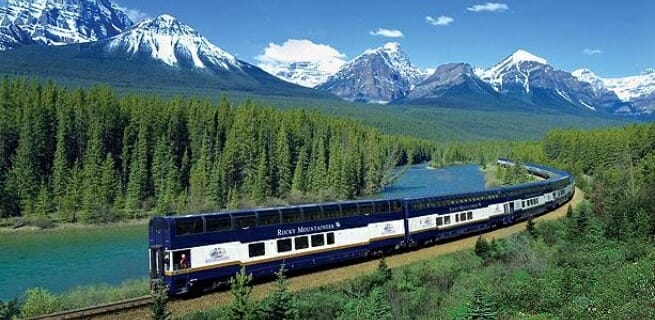
Traveling through the mountains—whether by the iconic Rocky Mountaineer train or the Icefields Parkway—is a humbling experience. The scale of the peaks and the abundance of wildlife, from grizzly bears to elk, underscore Canada’s commitment to wilderness conservation.
The journey ends on the Pacific Coast in British Columbia. Vancouver offers a rare combination of ocean and mountains, where you can ski in the morning and sail in the afternoon. The lush temperate rainforests of Vancouver Island and the misty archipelago of Haida Gwaii offer a spiritual conclusion to the cross-country trek, rooted in the ancient history of Indigenous peoples.
Essential Tips for the Canadian Traveler
- Respect the Distance: Do not underestimate driving times. Canada is vast; driving from Toronto to Vancouver takes approximately 45 hours of pure driving time. Plan your stops and embrace the “slow travel” philosophy.
- Prepare for All Weather: Even in summer, temperatures can drop significantly at night, especially in the mountains or the north. Layers are your best friend.
- Respect the Wildlife: Bears, moose, and cougars are common in many parks. Always maintain a safe distance and follow “Bear Aware” protocols for food storage.
- Book Early: Popular spots like Banff or Prince Edward Island fill up months in advance during the peak summer season (July and August).
Conclusion
Traveling across Canada is an exercise in wonder. It is a country that challenges your sense of scale and rewards your curiosity with unparalleled natural beauty. From the salty air of the Atlantic to the mist of the Pacific rainforests, the journey reveals a nation that is diverse, welcoming, and deeply connected to the wild.
Whether you are looking for the sophistication of Montreal’s dining scene or the solitude of a campfire in the Rockies, Canada offers a sanctuary for every type of traveler. To cross this country is to witness the majesty of the natural world and the vibrant tapestry of human history that has been woven across it. It is a journey that does not just take you across a map, but leaves a lasting impression on your soul.